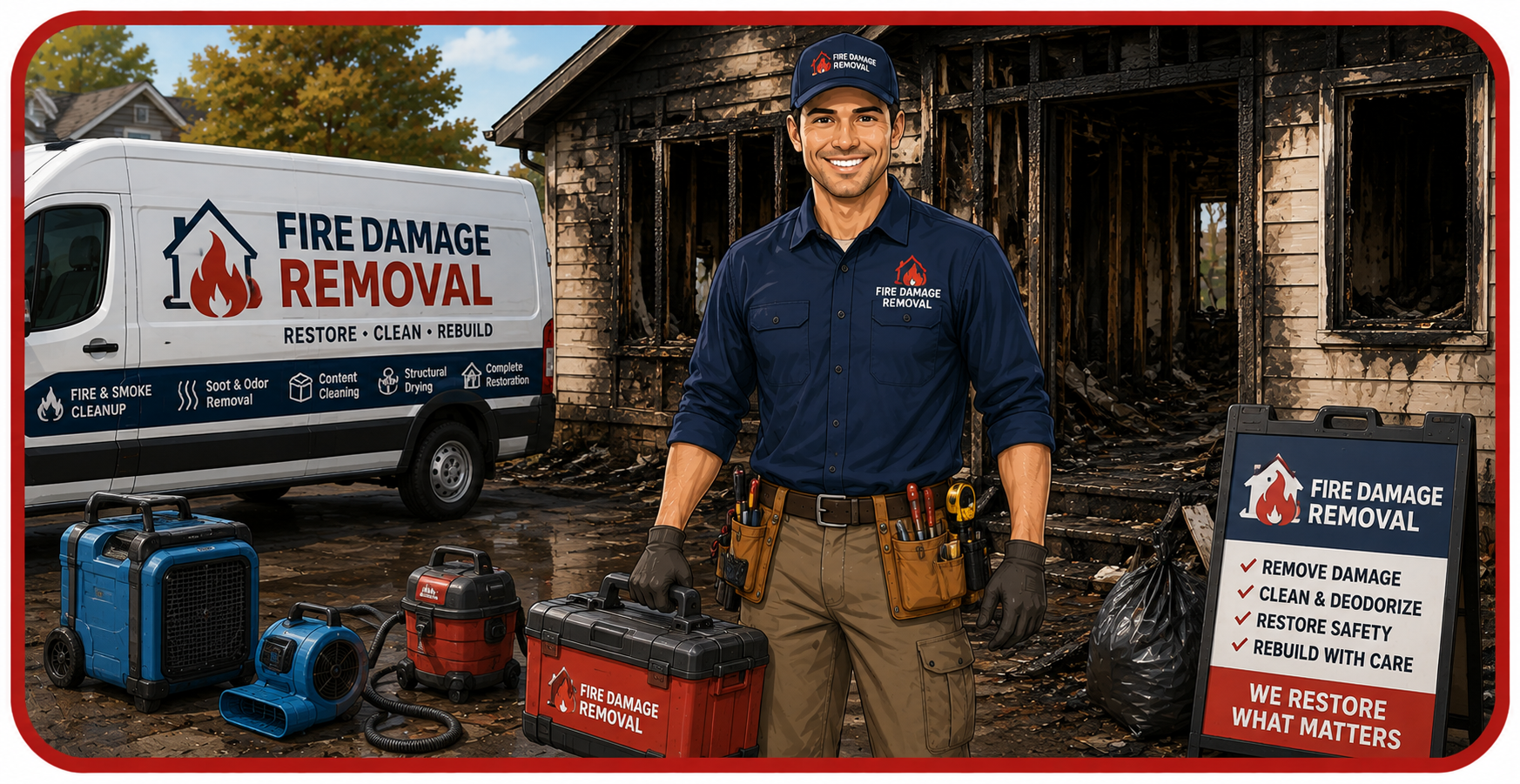
A house fire doesn't wait for business hours, and neither do we. Fire Damage Laser Cleaning sends licensed, insured Fire Damage Removal specialists to your door in National Park, NJ whenever disaster strikes, without exception.
From the first call to the final walkthrough, our National Park-area crews handle board-up, water extraction from firefighting efforts, soot and smoke removal, and full structural rebuild so you're not juggling five different contractors during the worst week of the year.
Call +1-866-484-1409 Now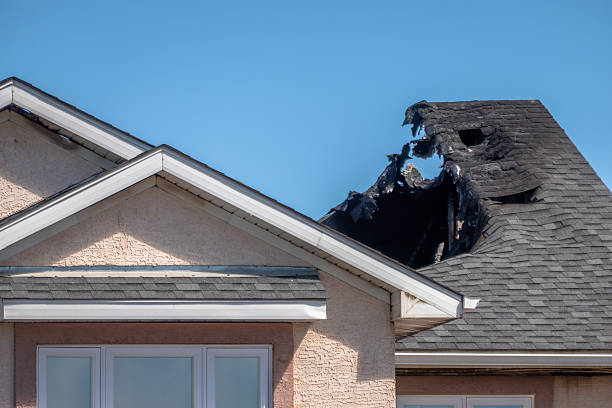
We started Fire Damage Laser Cleaning around a single idea: a family that just watched smoke pour out of their own windows shouldn't have to spend the next three hours cold-calling contractors who never pick up. Our dispatchers answer the phone personally, every time, and our crews carry the certifications, the equipment, and the insurance paperwork to prove they know what they're doing before they ever step onto your property.
Our National Park, NJ field staff all hold up-to-date IICRC credentials specific to fire and smoke restoration, which means they're trained to identify the difference between protein residue from a kitchen fire, dry smoke from a fast-burning wood fire, and wet smoke from a smoldering synthetic-material fire — because each one calls for a different cleaning chemistry.
Our people show up in our trucks, wearing our uniforms — we don't subcontract the job out to whoever's available, which keeps accountability in one place instead of scattered across three different companies pointing fingers at each other. If something isn't right, you call the same number and talk to the same team that started the job.
Beyond the technical certifications, our Fire Damage Removal teams carry general liability and workers' compensation coverage, so a National Park property owner isn't exposed to liability if someone gets hurt hauling debris out of a fire-damaged structure. That paperwork is available on request, before a single tool comes off the truck — most homeowners never think to ask a contractor for this, and that's exactly when it becomes a problem later.
Between them, our National Park-area lead technicians have worked losses ranging from a stovetop grease fire to apartment complexes where several units were affected at once, and that range matters because the right approach for a small contained fire is often wrong for a larger one — over-treating a small job wastes your money, and under-treating a large one leaves odor and structural risk behind.
We also keep a stocked local equipment cache — air movers, dehumidifiers, ozone generators, and hydroxyl units — rather than renting gear from a regional supplier after the call comes in, which is one of the reasons our National Park response times run faster than crews dispatching from a distant regional office.
Every technician carries current IICRC fire and smoke restoration certification, and the company carries full liability and workers' comp coverage — verifiable before you sign anything.
Because we stage crews and equipment locally rather than dispatching from a distant regional office, National Park calls get a truck moving quickly — usually within the hour for active emergencies.
The estimate you approve up front is the number you see on the final invoice, not a starting point for upcharges — and we'll walk through every line with you.
We document everything in the format insurance adjusters expect and can bill your carrier directly in most cases, which keeps the claims process from stalling on paperwork.
Our National Park equipment cache covers thermal fogging, ozone treatment, air movers, and moisture-mapping tools ready to deploy same day — no waiting on a rental truck from another market.
The same crew that handles mitigation typically carries the job through to rebuild, so nothing falls through the cracks between contractors.
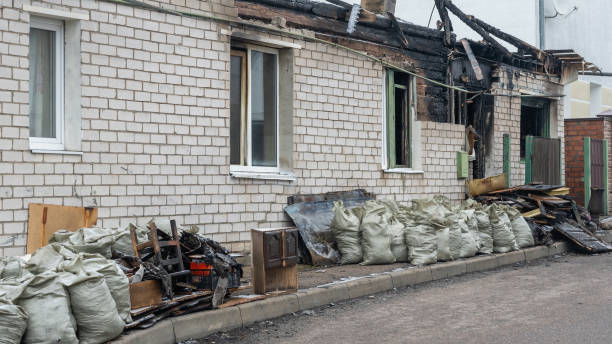
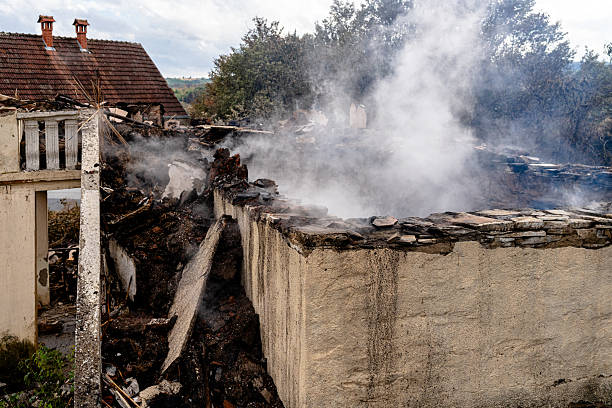
Once the fire trucks leave, the visible fire is usually the smallest part of the problem. Soot particles are acidic and keep eating into metal, grout, and finished surfaces for days after the fire is out if nobody removes them, which is why waiting a week to "assess things yourself" almost always makes the eventual repair bill bigger.
When febreze and open windows stop working, the smoke has already penetrated porous building materials — and that needs source removal, not masking.
Dark streaking near ceiling vents typically means dry smoke has traveled through your HVAC system and spread further than the original room.
The water used to put the fire out frequently causes damage that rivals the fire itself, and if it sits for more than 24-48 hours, mold becomes the next problem on top of the fire damage.
Running your HVAC system after a fire can pull soot through every duct in the house — a full duct cleaning or replacement is almost always part of a proper Fire Damage Removal scope.
Homeowners in National Park sometimes call three months after a small fire because the smell finally became unbearable in warm weather, and by then the soot has had a season to keep degrading materials — heat and humidity accelerate the chemical breakdown that soot causes in wood, drywall, and metal fixtures.
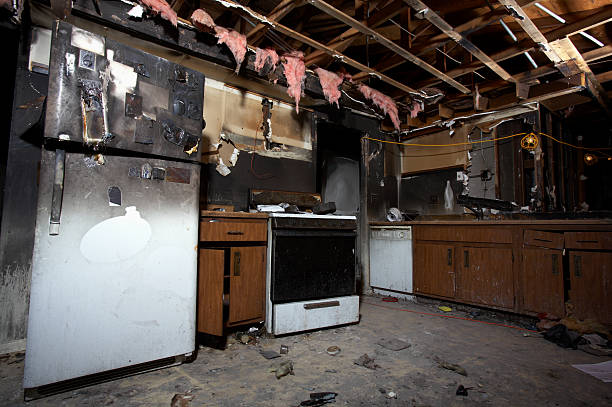
No two fires damage a property the same way, so our Fire Damage Removal scope covers the full range of what a National Park property might need, from a small kitchen grease fire to a total structure loss.
Within hours of your call, our crew secures the property with board-up and tarping to stop weather and looters from causing a second round of damage so the property isn't exposed while the rest of the plan comes together.
Our residential scope covers pack-out of salvageable belongings, surface-by-surface soot removal, and odor treatment throughout the home before any painting or repair begins.
For commercial Fire Damage Removal, we build a phased scope so the highest-priority sections of the building reopen before the full job wraps while documenting everything your insurance adjuster will need.
Odor is chemistry, not a scent problem, so we use thermal fogging, ozone, and hydroxyl generators matched to the type of smoke residue found rather than running one generic process on every job.
After demolition and cleaning, the same team can carry the job through drywall, flooring, and finish work so you're not sourcing a separate general contractor for the second half of the job.
Salvageable belongings get inventoried, packed, and cleaned off-site using ultrasonic and ozone treatment specific to the material before returning to the restored property.
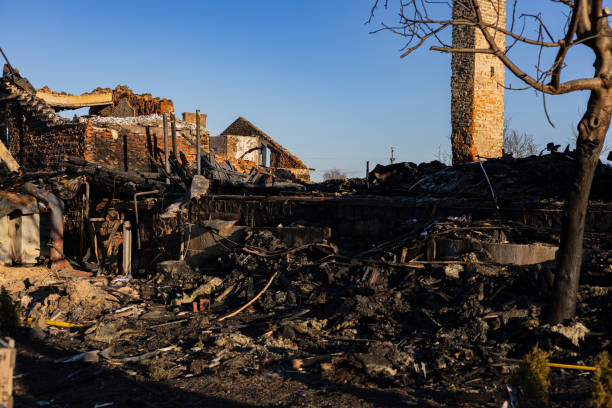
We log photo documentation at every stage of a National Park job, and that log is exactly what most adjusters ask for when reviewing a claim. That habit alone has shortened claim approval timelines for more than a few of our National Park customers.
Calling +1-866-484-1409 connects you straight to dispatch, who route the closest available team to your property right away.
On arrival, the crew lead inspects room by room, photographs the damage for your insurance file, and determines the smoke classification.
Mitigation work follows the order that stops secondary damage — securing the structure before anything else before demolition or rebuild starts.
The final phase covers repairs and finish work, wrapped up with a walkthrough where you sign off on the completed scope.
Our workmanship guarantee means that anything tied to the original scope of work gets corrected free of charge if it doesn't hold up. That guarantee is in writing, not a verbal promise made on the phone.
We also guarantee the estimate — the number you approve before work starts is the number on your final invoice, barring a documented and pre-approved change in scope. National Park homeowners dealing with insurance paperwork already have enough moving pieces without a contractor adding a sixth.
Every project gets a single point of contact whose direct number you keep for the length of the job, rather than a rotating call center — that continuity matters most in the middle of a stressful rebuild.
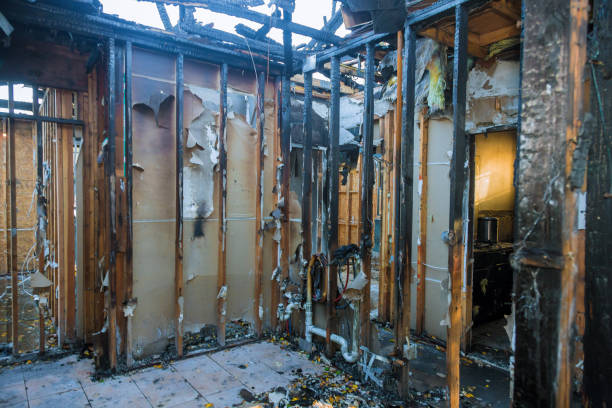
"Our kitchen fire could have been so much worse, but the crew had the smoke smell handled within two days." They also walked me through the insurance paperwork, which I had no idea how to handle on my own.
— Rachel D., National Park
"Called at 11pm after a garage fire and someone answered — not a machine, an actual person." A crew was on-site securing the property before sunrise.
— Marcus T., National Park
"They matched the trim so well after the rebuild that visitors can't tell which wall was damaged." Communication throughout was better than any contractor I've used before.
— Priya S., National Park
"As a small business owner, the phased plan meant my front counter reopened while the back office was still being rebuilt."
— Devon K., National Park
"The pack-out team treated our belongings carefully, and the ozone cleaning got the smoke smell fully out of the upholstery."
— Angela W., National Park
We serve National Park and reach well beyond it across National Park, NJ, with staged equipment that keeps response times short even outside the immediate city core.
Because fires don't schedule themselves around business hours, our National Park coverage includes weekends, holidays, and overnight calls at the same response standard as a Tuesday afternoon — the same standard applies every time the phone rings.